




2020 Honda Accord problems owners report most
2020 Honda Accord problems are documented in public: owners have filed 407 complaints with NHTSA, the earliest in 2020 and the most recent in 2026. Sorting those by the component the filer named puts the forward collision avoidance clearly first, at 112 of the 407 complaints, about a quarter of everything filed.
A complaint is not a repair bill and not a defect finding. It is one owner telling the regulator something went wrong. What makes the count useful is the concentration: when one component takes 28 per cent of everything filed on a car, the pattern is doing more than chance.
| Component | Complaints | Share |
|---|---|---|
| FORWARD COLLISION AVOIDANCE | 112 | 28% |
| ENGINE | 78 | 19% |
| ELECTRICAL SYSTEM | 66 | 16% |
| SERVICE BRAKES | 62 | 15% |
| UNKNOWN OR OTHER | 57 | 14% |
| FUEL/PROPULSION SYSTEM | 55 | 14% |
Against the 2019 car, this model year has drawn 49 per cent fewer complaints (407 against 792). The 2019 car was led by its engine instead, so the pattern shifted between the two years.
Of those complaints, 17 describe a crash and 2 describe a fire. Filers reported 13 injuries. 2 complaints report a death.
Recalls on the 2020 Honda Accord
A recall means the manufacturer or the regulator found a safety defect, and the repair is free at a franchised dealer however old the car is. There are 6 recalls on this model year. Your own car may be covered by some, all or none of them, so check the VIN rather than the model.
Honda (American Honda Motor Co.) is recalling certain 2020 CR-V Hybrid, Accord Hybrid, and 2020-2021 Insight vehicles. The DC-DC converter may shut down and prevent the 12-volt battery from recharging, possibly resulting in a loss of drive power.
The risk. A loss of drive power can increase the risk of a crash.
The fix. Honda will notify owners, and dealers will update the power converter unit (PCU) software, free of charge. The recall began February 12, 2021. Owners can contact Honda customer service at 1-888-234-2138. Honda's number for this recall is K9E.
Honda (American Honda Motor Co.) is recalling certain 2018-2020 Accord Sedan, Accord Hybrid, and 2019-2020 Insight vehicles. A software error may cause intermittent or continuous disruptions in communication between the Body Control Module (BCM) and other components. This may result in malfunctions of various systems such as the windshield wipers and defroster, rearview camera, exterior lights, audible warning of a stopped vehicle, and power window operation. As such, these vehicles fail to comply with the requirements of Federal Motor Vehicle Safety Standard (FMVSS) number 103, "Windshield Defrosting and Defogging Systems" and number 111, "Rear Visibility" as well as FMVSS numbers 104, 108, 114, 118, and 305.
The risk. Various system malfunctions such as inoperative windshield wipers, defroster, rearview camera, or exterior lighting can increase the risk of a crash.
The fix. Honda will notify owners, and dealers will update the BCM software, free of charge. The recall is expected to begin February 22, 2021. Owners may contact Honda customer service at 1-888-234-2138. Honda's number for this recall is X95.
Honda (American Honda Motor Co.) is recalling certain 2013-2023 Honda Accord, Civic Coupe, Civic Sedan, Civic Hatchback, Civic Type R, CR-V, HR-V, Ridgeline, Odyssey, Acura ILX, MDX, MDX Hybrid, RDX, RLX, TLX, 2019-2022 Honda Insight, Passport, 2020 Honda CR-V Hybrid, 2018-2019 Honda Clarity PHEV, Fit, and 2015-2020 Honda Accord Hybrid, Pilot, Acura NSX vehicles. The fuel pump inside the fuel tank may fail.
The risk. Fuel pump failure can cause an engine stall while driving, increasing the risk of a crash.
The fix. Dealers will replace the fuel pump module, free of charge. Owner letters were mailed September 6, 2024. Owners may contact Honda customer service at 1-888-234-2138. Honda's numbers for this recall are KGC and KGD. This recall is an expansion of NHTSA recall numbers 21V-215 and 20V-314.
Honda (American Honda Motor Co.) is recalling certain 2020-2022 Pilot, Accord, Civic sedan, HR-V, Odyssey, 2020 Civic coupe, Fit, 2021-2022 Civic hatchback, 2021 Civic Type R, Insight, 2020-2021 CR-V, CR-V Hybrid, Passport, Ridgeline, Accord Hybrid, 2020 Acura MDX, 2022 Acura MDX, 2020-2022 Acura RDX, and 2020-2021 Acura TLX vehicles. The front passenger seat weight sensor may crack and short circuit, failing to suppress the air bag as intended.
The risk. An air bag that deploys unintentionally during a crash can increase the risk of injury.
The fix. Dealers will replace the seat weight sensors, free of charge. Owner notification letters were mailed March 28, 2024. This is a phased recall. Owners may contact Honda customer service at 1-888-234-2138. Honda's numbers for these recalls are XHP and VHQ.
Honda (American Honda Motor Co.) is recalling certain 2018-2021, 2023 Acura TLX, 2019-2024 RDX, 2017-2020, 2022-2026 MDX, 2017-2021, 2023, 2025 Honda Ridgeline, 2017-2022 Pilot, 2019-2021 Passport, 2018-2026 Odyssey, 2019-2022 Insight, 2019-2021 HR-V, 2018-2020 Fit, 2020-2022 CR-V Hybrid, 2017-2022 CR-V, 2017-2018, 2021 Civic Type R, 2017-2021 Civic hatchback, 2016-2020 Civic coupe, 2016-2022 Civic, 2017-2022 Accord Hybrid, and 2016-2022 Accord vehicles. The front passenger seat weight sensor may crack and short circuit, which can cause the air bags to deploy unintentionally during a crash.
The risk. Air bags that deploy unintentionally during a crash increase the risk of injury.
The fix. Dealers will replace the seat weight sensors, free of charge. Owner notification letters were mailed July 7, 2026. Owners may contact Honda's customer service at 1-888-234-2138. Honda's numbers for this recall are BOL, WO9, OOA, WOM, XOH, NOC, POD, BOE, UOF, POB, EOG, AOI, QO8, TOJ, DO7, and SOK. This recall expands previous NHTSA recall number 24V064. Vehicle Identification Numbers (VINs) involved in this recall will be searchable on NHTSA.gov beginning May 29, 2026.
Honda (American Honda Motor Co.) is recalling certain 2019-2020 Acura MDX, MDX Sport Hybrid, RDX, TLX, Honda Accord, Civic Hatchback, Insight, 2019 Acura ILX, Honda Accord Hybrid, Civic Coupe, Civic Coupe Si, Civic Sedan, Civic Sedan Si, Civic Type R, Fit, HR-V, Odyssey, Passport, Pilot and Ridgeline, and 2018-2019 CR-V vehicles. The low-pressure fuel pump inside the fuel tank may fail.
The risk. Fuel pump failure can cause an engine stall while driving, increasing the risk of a crash.
The fix. Honda will notify owners, and dealers will replace the fuel pump assembly, free of charge. Owner letters were mailed May 18, 2021. Owners may contact Honda customer service at 1-888-234-2138. Note: This recall is an expansion of recall 20V-314.
In owners own words
These are complaints filed about the forward collision avoidance, quoted as written. They are one persons account rather than a diagnosis, and they are here because a symptom described by a driver is easier to recognise than a component name.
It is uncertain which specific system/systems have failed/malfunctioned at this point. Despite frequent and consistent communication with Honda, no real attempt has been made to uncover the cause of this issue, and no solution has been provided. The vehicle has been, and is, available for inspection upon request. This is the 5th occurrence since the first event on 21 April 2025. This occurred on the interstate. During this event, the vehicle rapidly decelerated from 65 mph to 25 mph without the ability of the driver to intervene or take back control of the vehicle. This led to a very near mi
The contact owns a 2020 Honda Accord. The contact stated that while driving at an undisclosed speed, several unknown warning lights illuminated, and the Forward Collision Avoidance message was displayed. The vehicle was taken to the dealer. The contact was informed that the radar sensor, located on the front bumper, indicated that the vehicle was involved in a crash. The contact stated that the vehicle was not involved in a crash. The vehicle was repaired. The contact stated that on a separate occasion, while driving at an undisclosed speed, the vehicle experienced phantom braking twice. After
It is uncertain which specific system/systems have failed/malfunctioned at this point. Despite frequent and consistent communication with Honda, no real attempt has been made to uncover the cause of this issue, and no solution has been provided. The vehicle has been, and is, available for inspection upon request. This is the 1st occurrence since the first event on 21 April 2025. This occurred on the interstate. During this event, the vehicle rapidly decelerated from 75 mph to 20 mph without the ability of the driver to intervene or take back control of the vehicle. This led to a very near mi
It is uncertain which specific system/systems have failed/malfunctioned at this point. Despite frequent and consistent communication with Honda, no real attempt has been made to uncover the cause of this issue, and no solution has been provided. The vehicle has been, and is, available for inspection upon request. This is the 7th occurrence since the first event on 21 April 2025. This occurred on the interstate. During this event, the vehicle rapidly decelerated from 70 mph to 60 mph without the ability of the driver to intervene or take back control of the vehicle. This led to a very near mi
Every component, by complaint count
The full breakdown of what owners named when they filed. Components below the top ten are grouped out of this table.
| Component | Complaints | Share of all complaints |
|---|---|---|
| FORWARD COLLISION AVOIDANCE | 112 | 28% |
| ENGINE | 78 | 19% |
| ELECTRICAL SYSTEM | 66 | 16% |
| SERVICE BRAKES | 62 | 15% |
| UNKNOWN OR OTHER | 57 | 14% |
| FUEL/PROPULSION SYSTEM | 55 | 14% |
| AIR BAGS | 36 | 9% |
| STEERING | 25 | 6% |
| LANE DEPARTURE | 19 | 5% |
| POWER TRAIN | 19 | 5% |
How other model years compare
The same nameplate across the years we hold. Complaint counts fall naturally for newer cars because fewer of them have been on the road for long, so read the column as a rough signal rather than a ranking. In this set the 2018 Honda Accord has drawn the most complaints and the 2021 Honda Accord the fewest.
What to check on the driver assistance systems
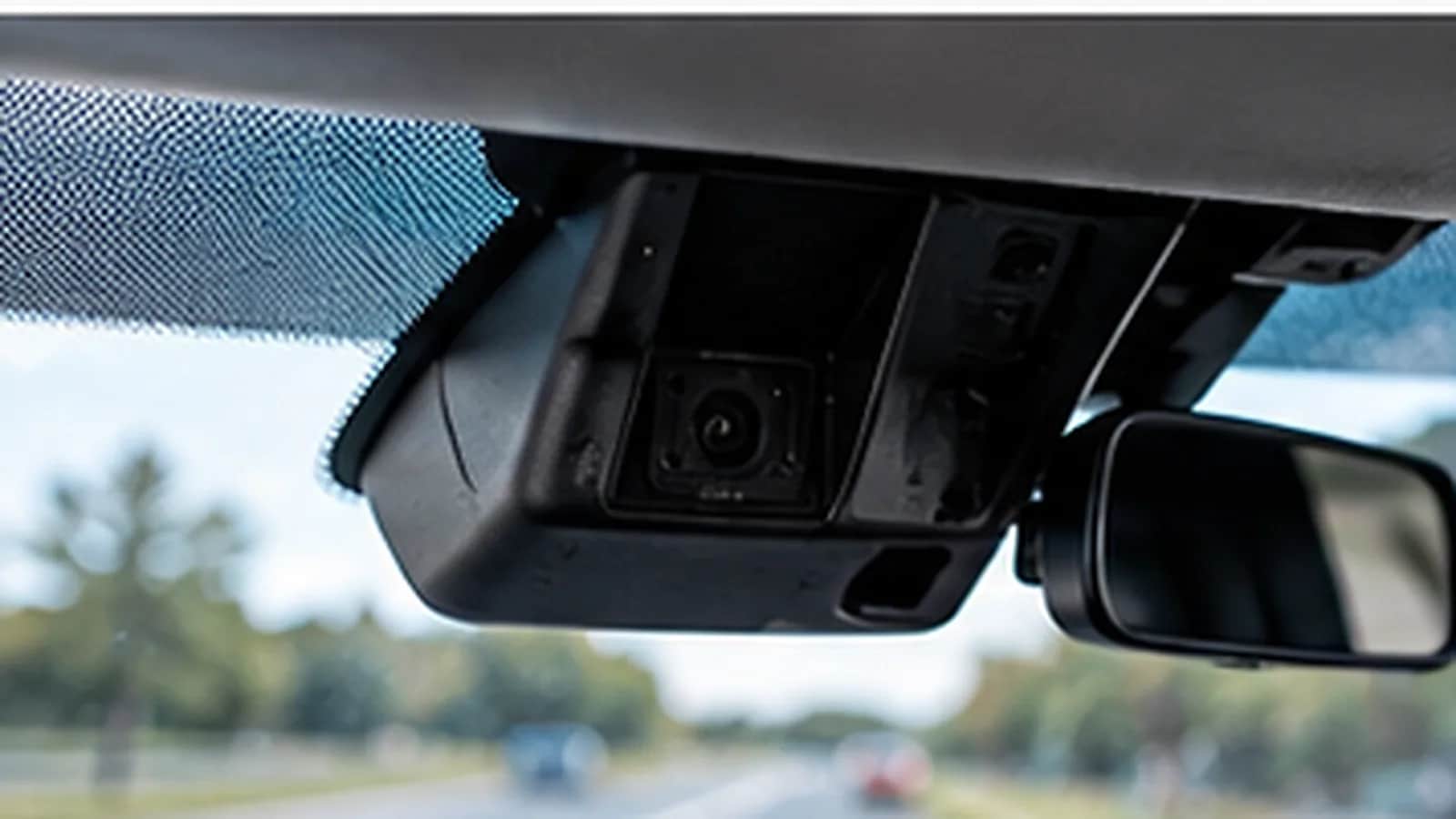
These reports are mostly about the car braking hard for something that was not there, or the system switching itself off and refusing to come back. Both happen more in rain, low sun and on roads with overhead signs.
Buying a used 2020 Accord
Check that every assistance system reports as available rather than disabled. A camera or radar that has been turned off in software is easy to miss during a test drive and expensive to put right.
If you already own one
Ask about calibration before replacing any sensor. These systems need recalibrating after a windscreen change, an alignment or any front end work, and an uncalibrated sensor produces exactly the faults described above.
- Confirm every assistance system reports as available, not disabled.
- Ask whether the windscreen has been replaced and the camera recalibrated.
- Check for front end repair history that would need a radar calibration.
- Ask whether a software update addresses the behaviour.
Where the 2020 Honda Accord problem data comes from
Every figure on this page is counted from complaints and recalls published by the National Highway Traffic Safety Administration, read November 1, 2026. Complaints are filed by owners and are not verified by the agency before publication. We count each complaint once per component it names, so a complaint naming two components appears in both rows.
- NHTSA recalls and complaintsRead November 1, 2026
- NHTSA record for the 2020 Honda AccordRead November 1, 2026
Something changed since we read this? Tell us